


By mapping user expectations and pain points, the experience design process ensures the application resonates with both patients and healthcare professionals. Structured research methods provided a nuanced view of priorities and trade-offs, guiding the integration of features that meet medical standards while fostering long-term user engagement. two key methods were central to these insights:
Persona
MoSCoW Method
______________________________________________________________________
Pains & Gains | Core working traits
Each target group has distinct needs. Healthcare professionals value seamless integration and transparent access to patient data, while patients face the challenge of adapting to new, often unsettling health realities. Yet both share a common goal: simple, intuitive tools that fir effortlessly into daily life.

Archetypes
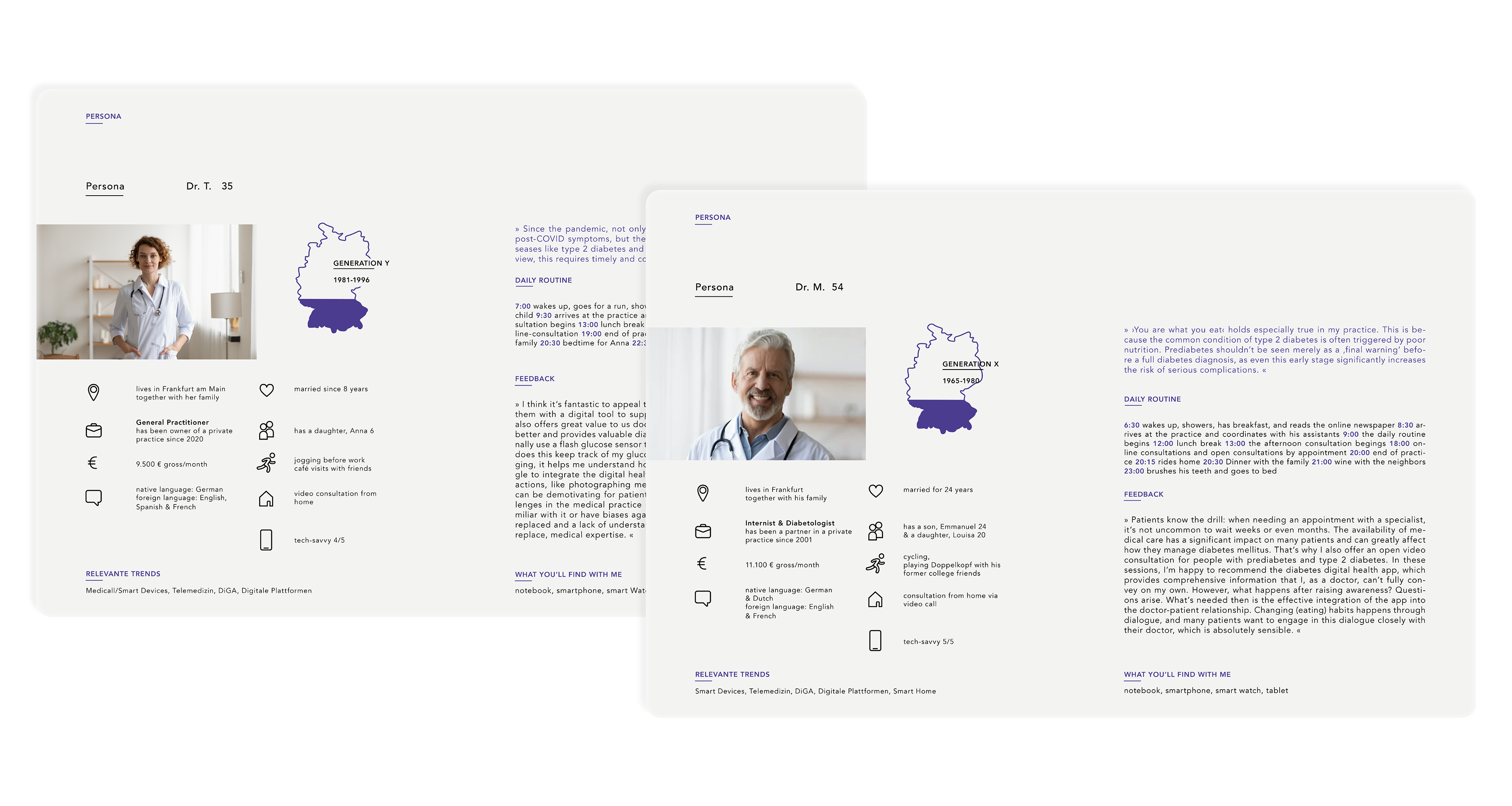
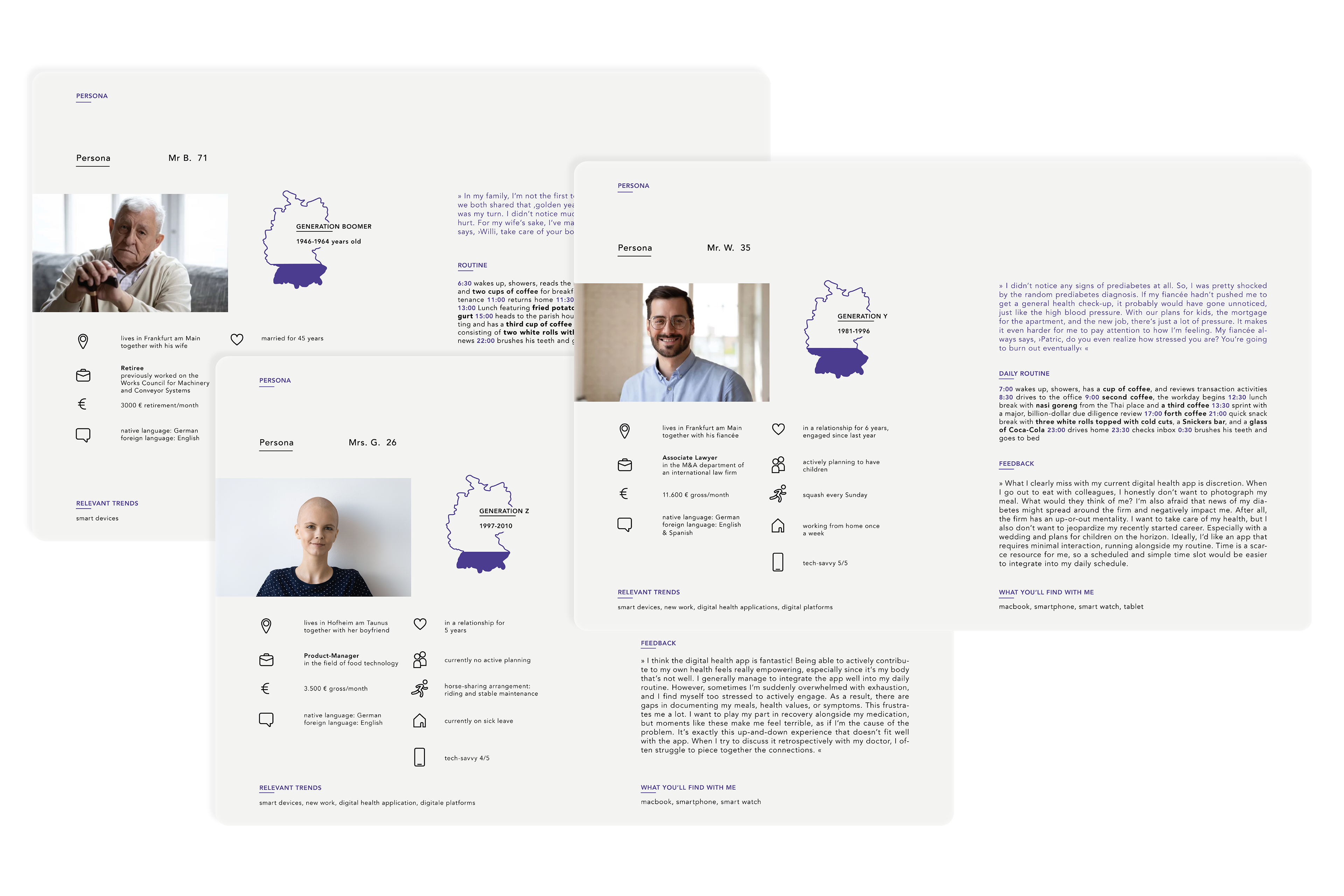
Professionals & Patiens | A synergy of combined needs
Doctors
Different doctors need different insights. General practitioners focus on generic diagnostic and giving patients an overview as well as general instructions of Type 2 Diabetes, while specialists provide detailed education and guidance on nutrition, lifestyle, medication, and therapeutical measures like in-depth glucose monitoring. All healthcare professionals, however, depend on fast. accessible data transfer to support clear communication. Core features should therefore combine disease literacy, comprehensive care, and seamless data-driven interaction.
Patients
A digital health application acts as a vital bridge between doctors and patients, enhancing both interaction and experience. For patients, this means intuitive design, quick and simple use, and semaless integration into daily life. Because health issues still carry stigma, the app must also support emotional well-being, respond to feedback, and address fluctuating engagement with empathy. By gently encouraging reengagement and sustaining motivation, it helps turn prevention into an accessible, personal space.

Takeaways




Dual-Focus Directive| Two hearts, one pulse
How can both needs be seamlessly met? Striking the right balance means merging medical precision with intuitive design to create a shared language between patients and professionals, enabling smooth information flow while ensuring accessibility and engagement. The central challenge is to support clinical workflows without burdening healthcare professionals, while empowering individuals to take an active role in their health and therapy; essentially fostering meaningful communication without compromising professional standards of healthcare.
______________________________________________________________________

