


Designing for behavioural change requires more than theory, it demands an understanding of how actions emerge within context. By mapping the interplay between behaviours, constraints, and transitions, we can see how environments shape habits. analysing these dynamics in real settings allows interventions to be strategically placed to support lasting change. To bring this into practice, a targeted behavioural design method was applied:
Topological Structure
______________________________________________________________________
Mechanism | Where change begins
The psychological mechanism of disidentification fosters self-awareness and strengthens self-efficacy by enabling individuals to detach from traits or behaviours with which the are unconsciously identified. Every aspect of the psych -whether it be belief, skill, or emotion- exists in relation to its opposite, oly though thud detachment can one perceive the other side. By engaging with their inner world from an observers stance, individuals recognise that they are not defined by what they perceive, eventually cultivating a neutral and accepting awareness. Through this process, unconscious actions become conscious, allowing ingrained behaviours to be examined, redefined, and gradually transformed into new, sustainable, and health-promoting habits.

Unconsciousness

Breakpoint | From impulsiveness to mindfulness
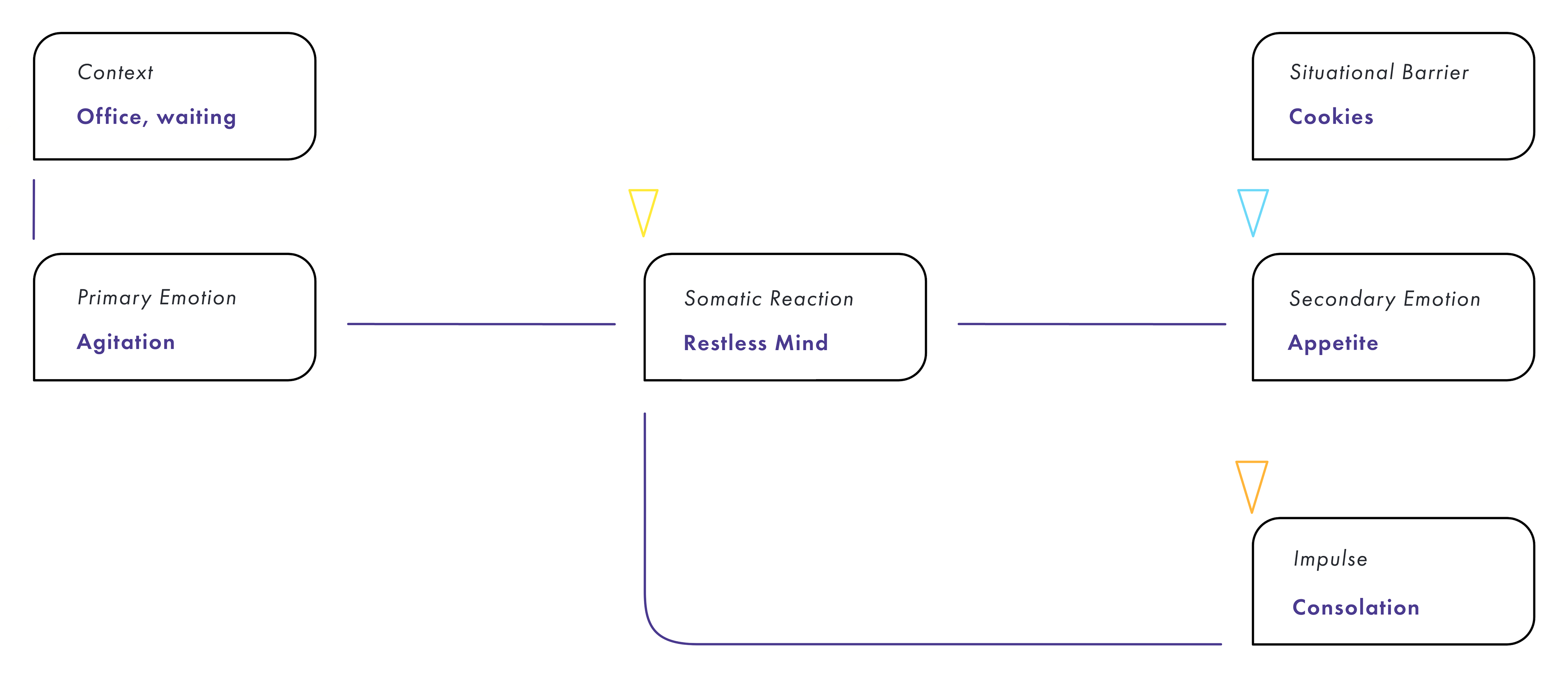
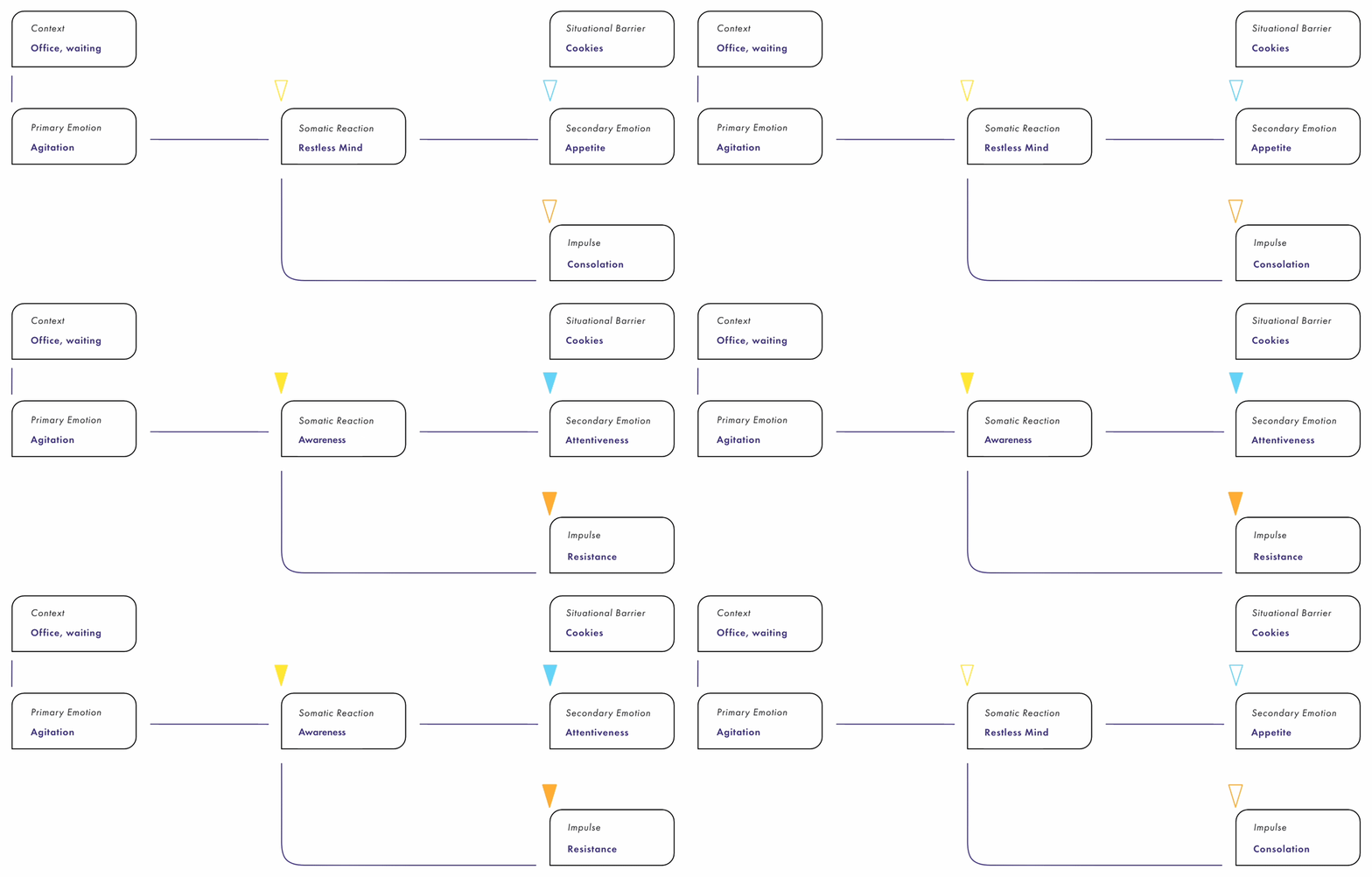
When emotional and bodily signals remain unclear, discomfort, often triggers impulsive act of relief, and with it quick fixes that soothe momentarily but reinforce habitual, unconscious pattern. However, when these signals are consciously recognised, the same discomfort transforms into an opportunity for mindful and intentional response. Guided by awareness rather than impulse, individuals can choose actions aligned with genuine needs and long-term well-being, cultivating resilience and clarity in the face of emotional tension.
Consciousness

Key Function | Somatic and emotional assessment
Behavioural patterns are fluid, continually shaped by subtle environmental shifts, moments of friction or ease, and the balance between familiarity and disruption. Disidentification enables individuals to step back from the resulting automatic response, observing thoughts, emotions, and actions without attachment – a vital step towards intentional change. Building on this, distinguishing between emotionally rooted responses and subtle but genuine somatic reactions can play a crucial role in guiding individuals towards more conscious, adaptive choices in everyday life.
______________________________________________________________________

