


Translating structured categories into tangible, interactive form requires bridging abstraction and design. To make the symbolic translation of internal states and decision-making both accessible and actionable, visual representation becomes essential. By transforming abstract mechanisms into concrete design elements, a coherent visual language emerges. One that captures the fluid interplay of emotional and somatic responses while keeping them intuitively legible. This approach creates a unified framework where complex experiences are not only mapped but translated into functional, interactive components that foster awareness and guided action. To achieve this, one complementary strategy was introduced:
Concept Sketch
______________________________________________________________________
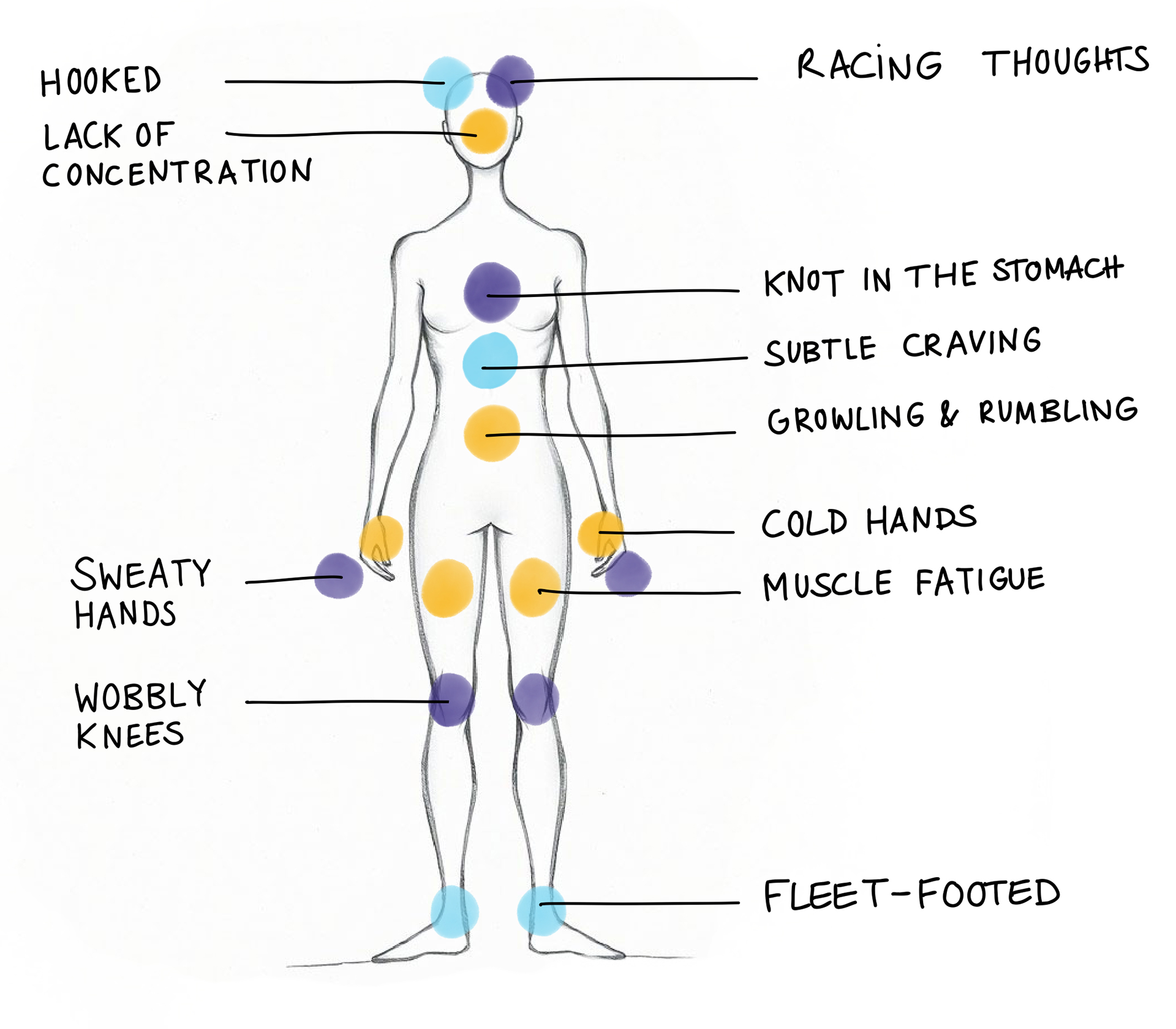
Somatic Marker | Structured Categorization
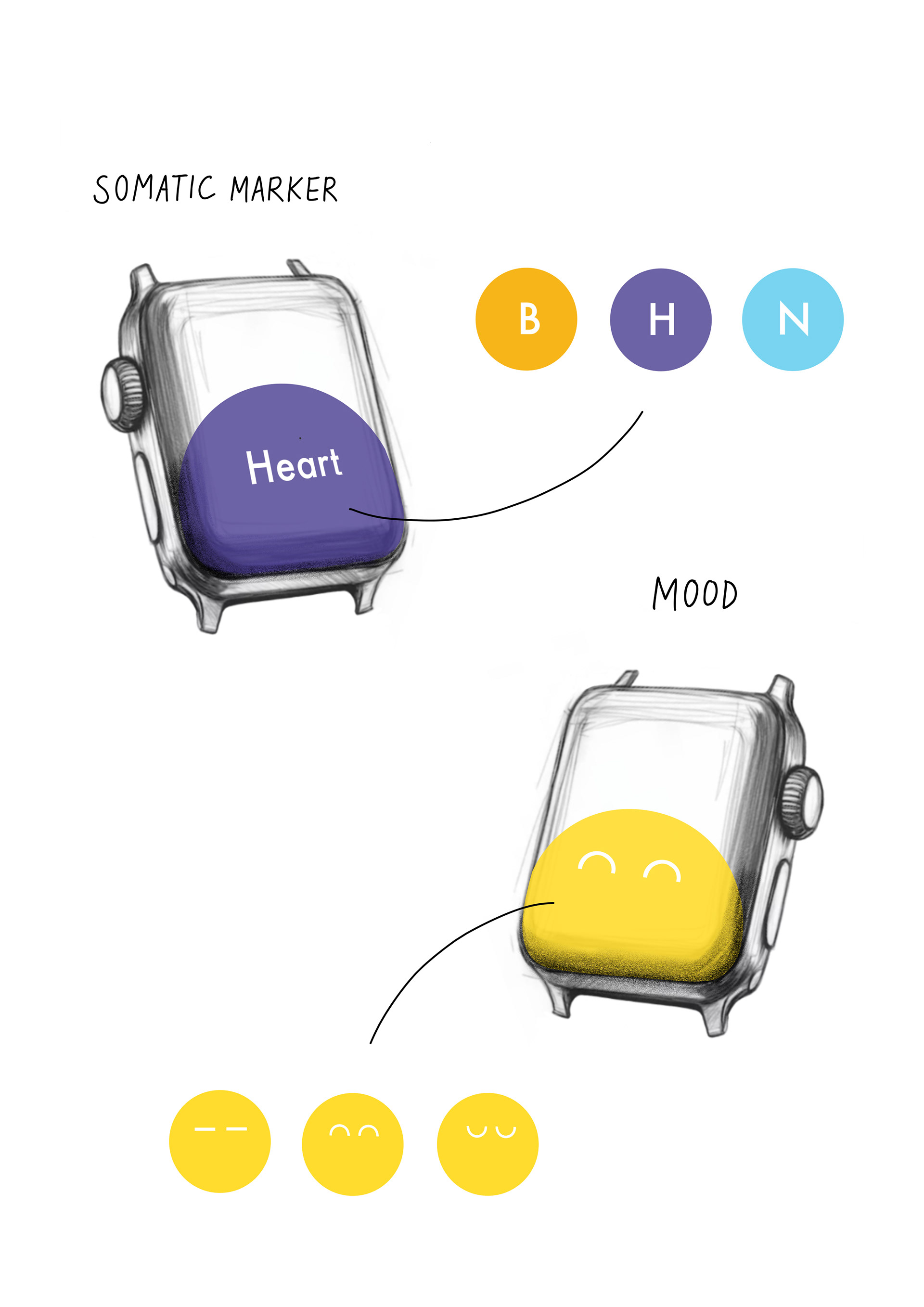
Building on the recognition of emotions through bodily signals, somatic markers can be organised and distilled into essential forms. This structure forms the basis of a visual system that translates abstract bodily cues into intuitive design elements, making internal states visible, accessible, and easily understood, regardless of prior knowledge.
Elements
Categorisation
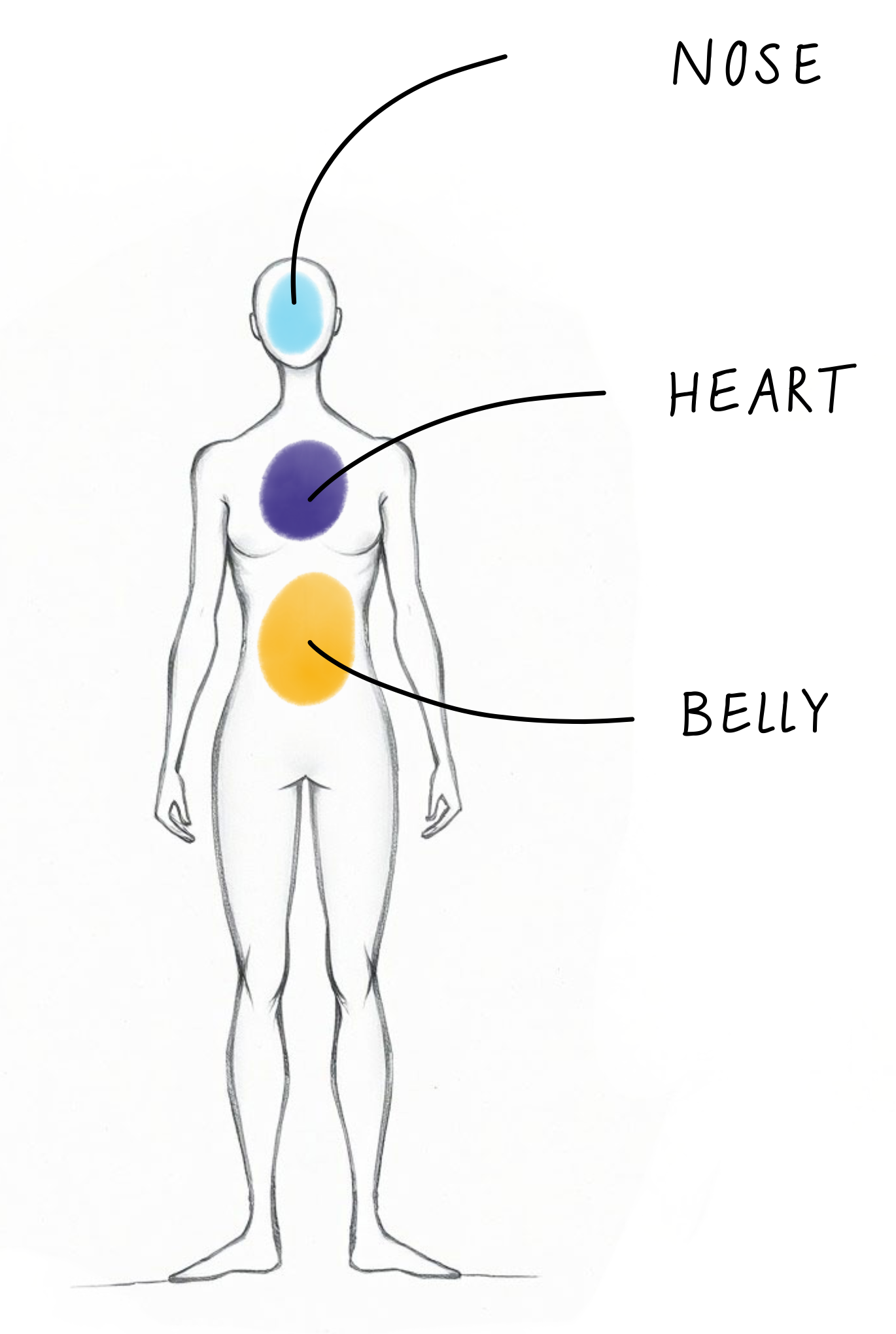
Visual Framework | Simplification through figuration
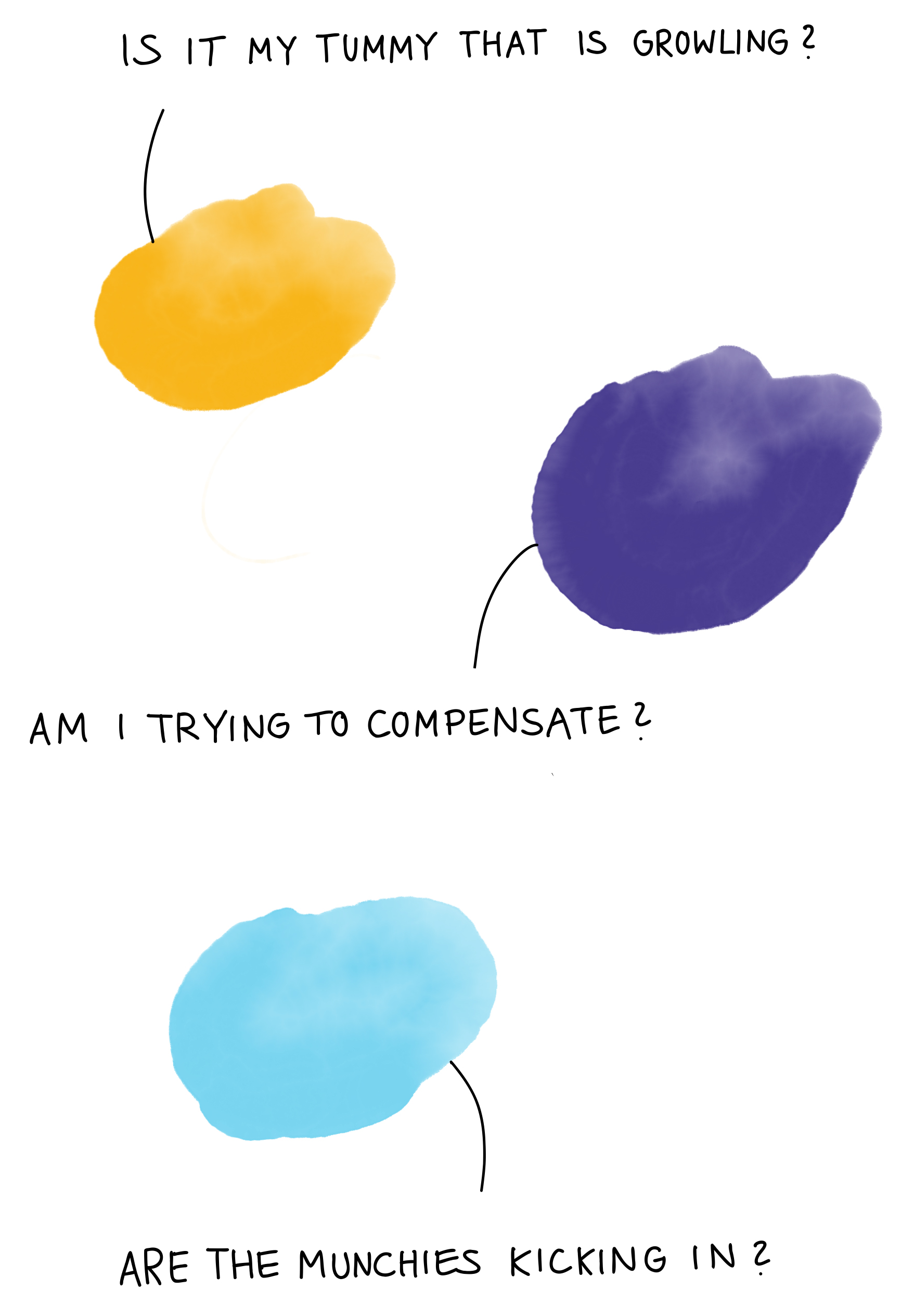
Building on this foundation, the visual framework uses figuration to foster emotional connection and intuitive understanding. At its core, the goal lies in shaping a ocular language that captures emotional depth yet remains sensitive to the multiplicity of perception. Recognisable forms enhance engagement, while strategic simplification reduces cognitive load, allowing complex sensations to be perceived effortlessly. This clarity -combined with figurative cues- supports memory retention, creating a system that is both engaging and instructive.

Visual Identity
Medium | Defining the frame
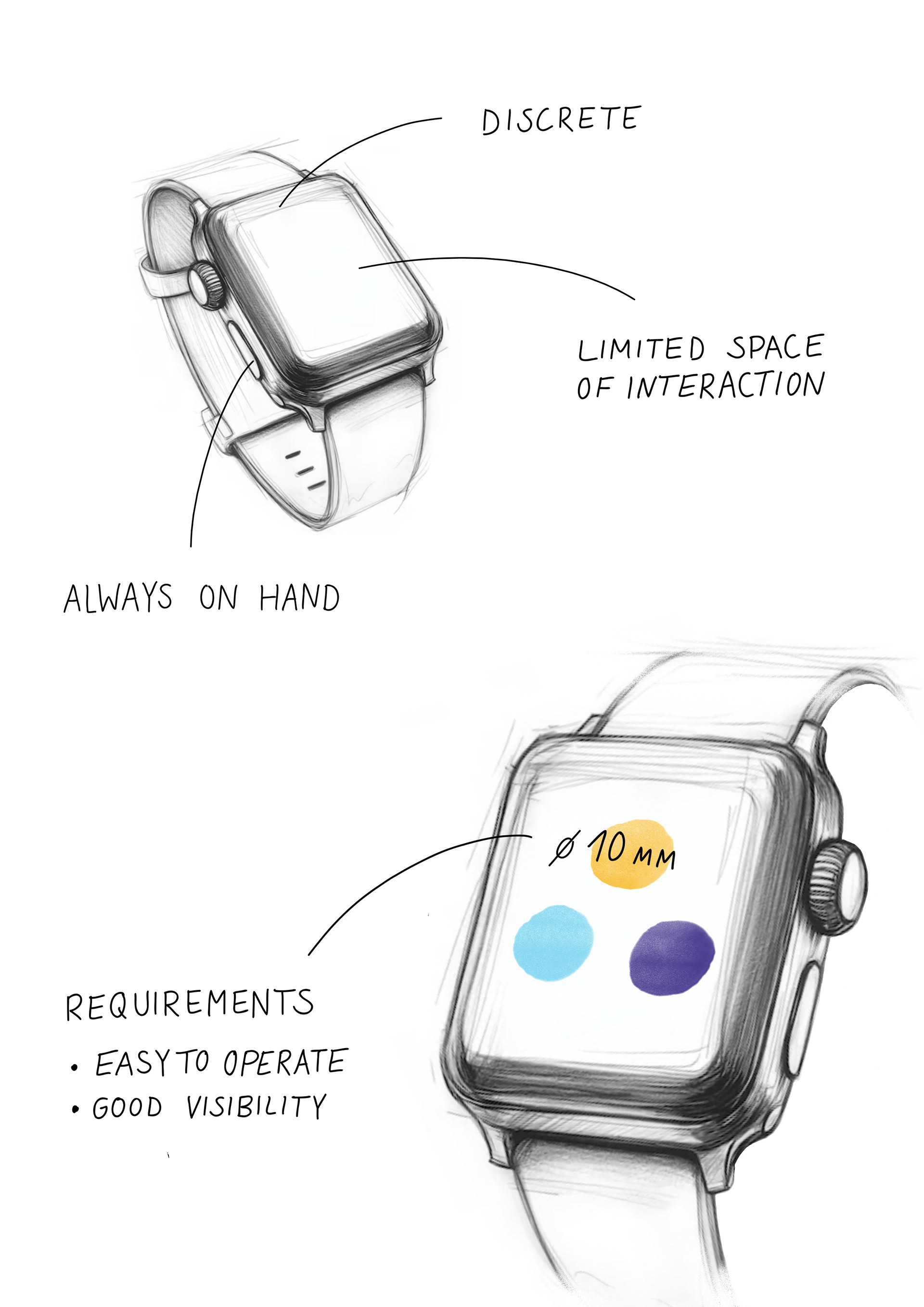
Before moving into ideation, it is essential to define the product context in which the User Interface (UI) will function. Since the core feature needs to be instantly accessible, a wearable device is the most suitable medium. This choice sets clear design parameters, aligning the visual framework, with the demand of mobility, discretion, and continuous availability. Defining these early ensures that abstract design principles translate into elements that are both visually coherent and technically viable within wearable environment.
Device
Design Elements | Ideation and variation
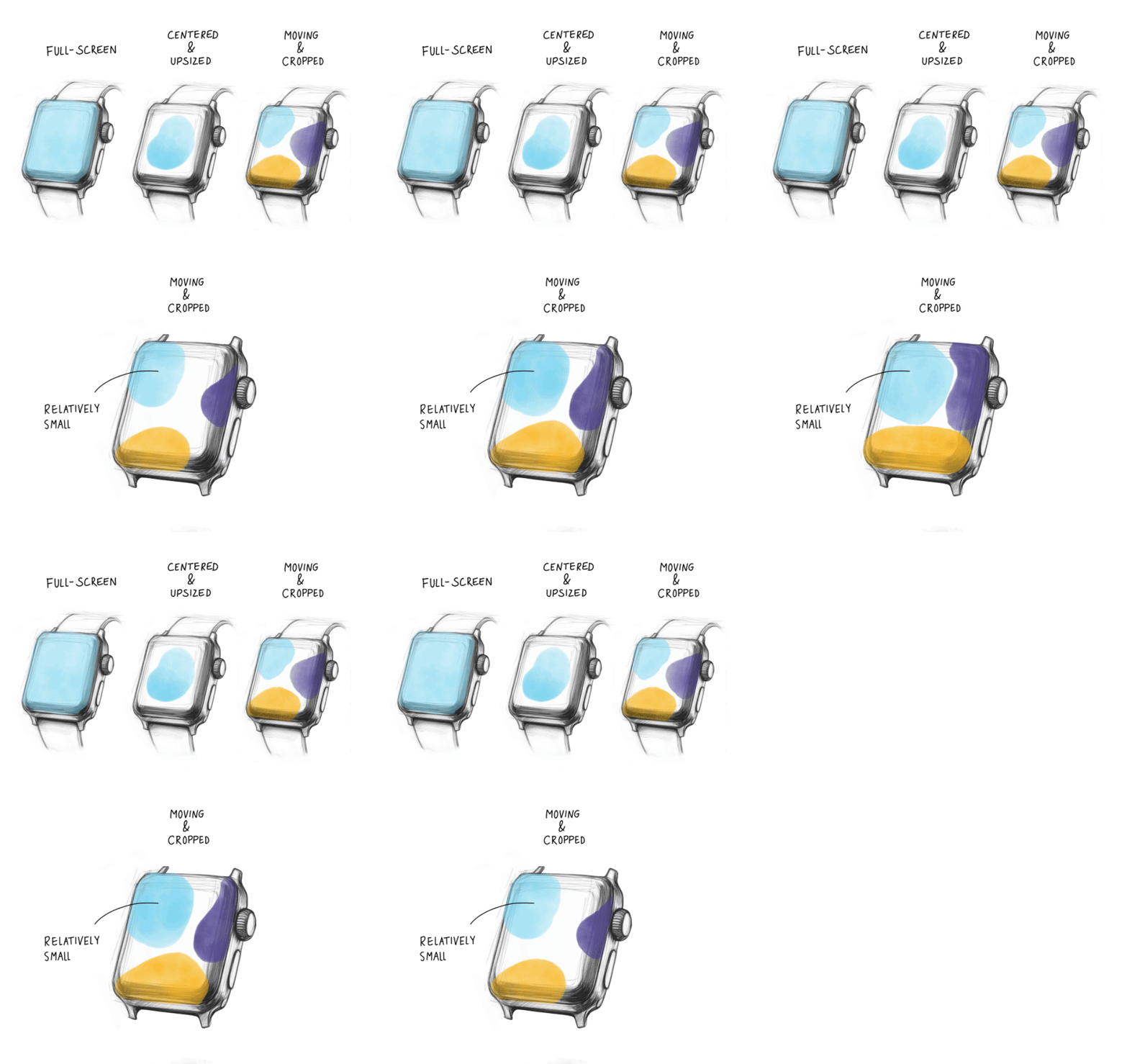
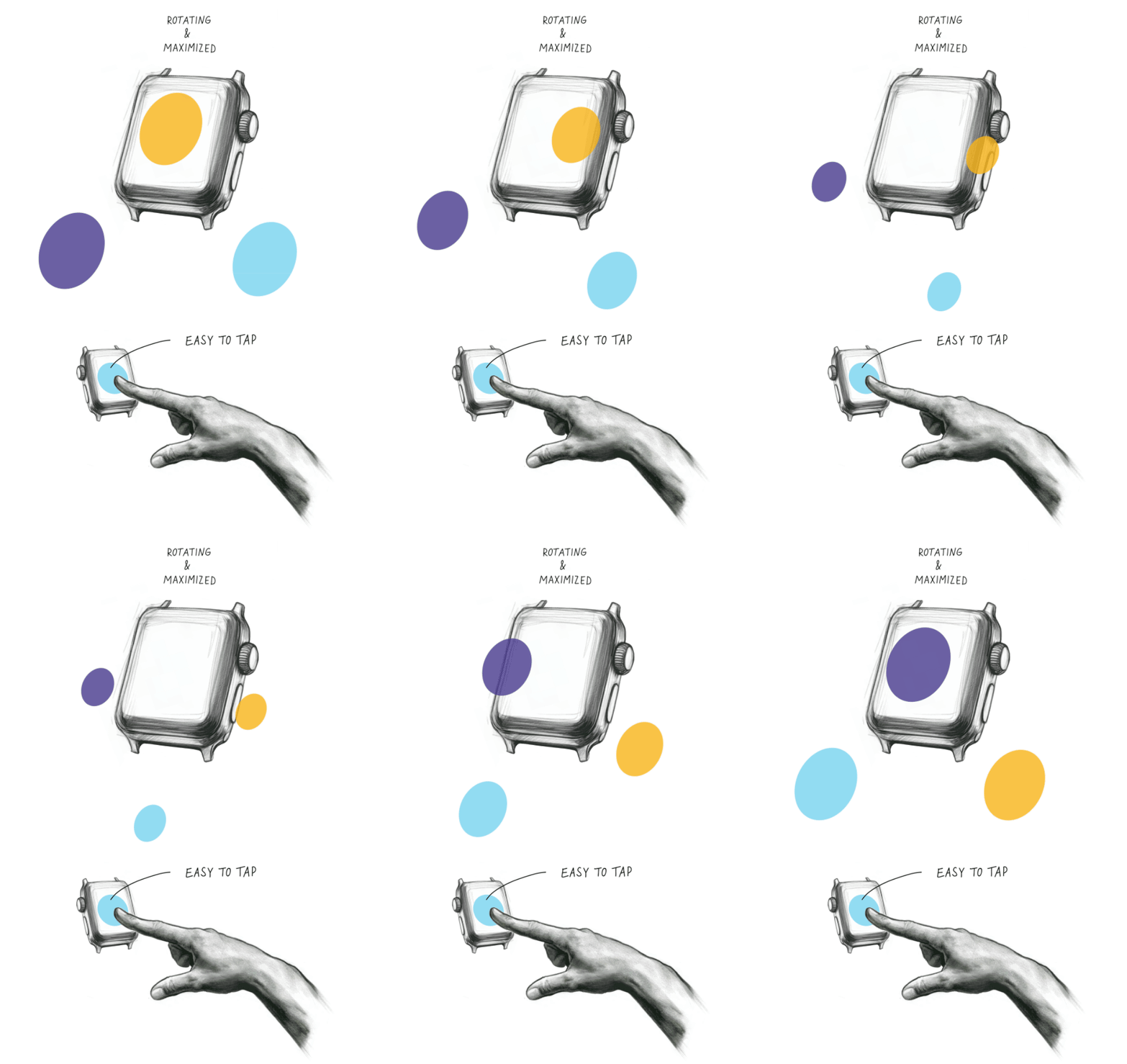
In the ideation phase, potential design elements are developed to translate the visual framework into a functional UI system. These elements embody figuration, simplification, and memorability while addressing interaction and usability. Through iterative refinement, abstract concepts become cohesive, adaptable interface components, turning the framework into a tangible system that guides the users experience with clarity and emotional depth.
Form
Function
UI System | Consistency across all components
From there, the interactive UI system expands naturally into related components, maintaining cohrerence across the wider digital environment. Its visual language acts as a unifying thread, ensuring seamless integration while preserving clarity and emotional depth. This evolution reinforces consistency and broadens the systems reach, turning the UI into a holistic design ecosystem.
Ecosystem
Systematic Depth | From visual appeal to structural substance
With its newly defined visual alphabet, Sense is build on a cohesive identity that ensures consistency, recognisability, and emotional resonance across all touchpoints. This visual foundation not only fosters intuitive interaction but also strengthens the users emotional connection to the system. Beneath this surface, numerous interconnected elements must be located, defined, and linked. Structuring these relationships forms a solid information architecture, clarifying how each component of the multi-device ecosystem operates within real-life contexts.
______________________________________________________________________

